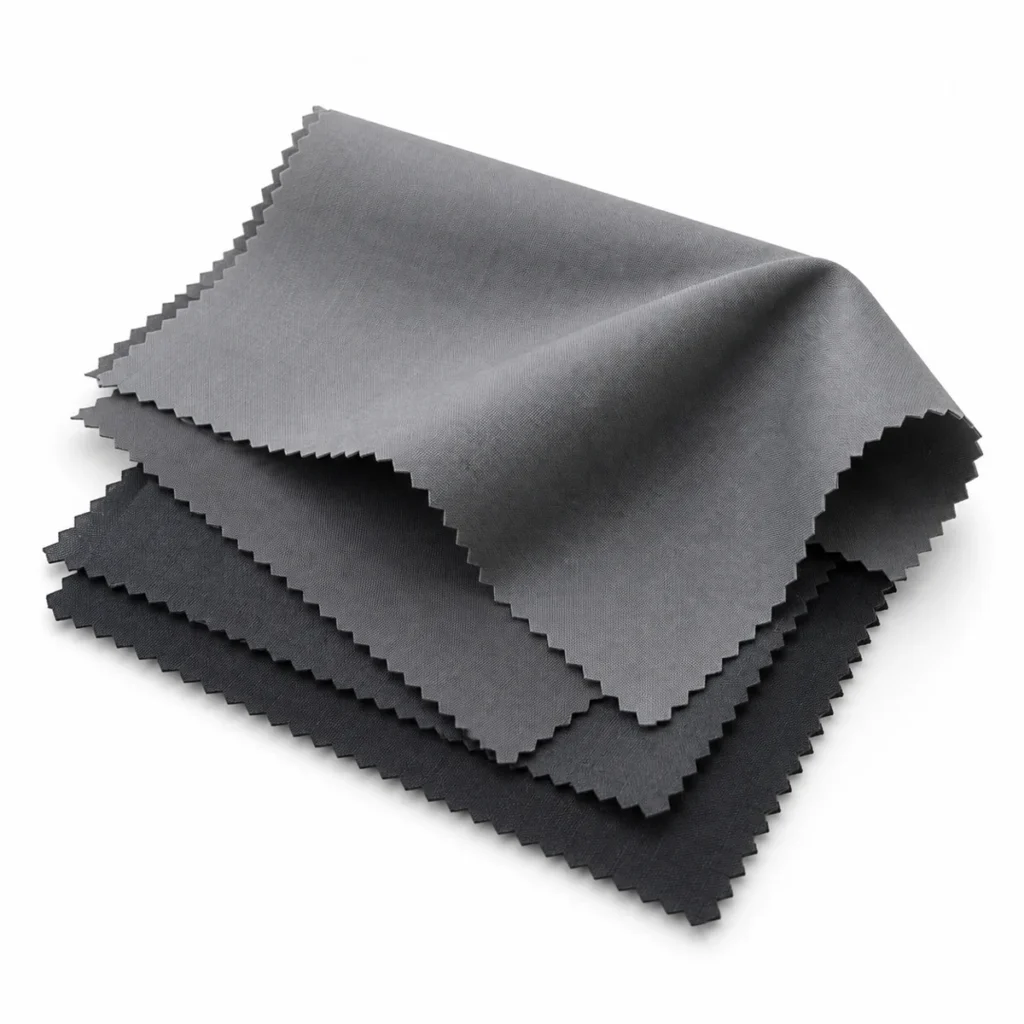
Polyester and nylon identify fiber families; pongee is a fabric description and can be made from polyester. Compare the actual fiber composition, fabric construction, finish and printed sample when selecting an umbrella canopy. Water resistance, weight and UV claims require their own specifications and evidence rather than a fabric name alone.
Start with the right comparison
Polyester and nylon describe fiber families. Pongee describes a fabric type or trade description, not a separate synthetic fiber. A supplier can offer polyester pongee, so these three labels are not mutually exclusive choices.
For an umbrella order, ask for composition, construction, fabric weight and finish together. Two fabrics sold under the same broad name may look, feel and print differently. A photograph is helpful for color direction, but it cannot establish the textile specification.
What each description tells you
| Description | What it identifies | What still needs checking |
|---|---|---|
| Polyester | A fiber family used in woven canopies | Weave, yarn, weight, coating and print method |
| Nylon | A different synthetic fiber family | Construction, finish and suitability for your artwork |
| Pongee | A fabric description often used in umbrella sourcing | Actual fiber composition and agreed supplier specification |
| RPET | A recycled polyester material direction | Recycled-content evidence plus the fabric specification |
A thread-density label by itself is not a complete quality grade. Compare like-for-like finished swatches rather than assuming that a larger number always produces a better umbrella.
Match the fabric to the project
For corporate gifts, consider the feel in the hand, color consistency, how the folded umbrella packs into its sleeve and the way your logo reads from a distance. For a light travel umbrella, the canopy is only one part of the weight budget: ribs, shaft, handle and opening mechanism also matter.
Do not infer water resistance or UV protection from fiber name alone. If your campaign requires a measured performance claim, agree on the finished material, relevant test and acceptance criteria before using that claim in marketing.
Check printing on the actual swatch
Send the intended artwork early. Fine lines, large solid areas and full-panel images place different demands on the print process. A printed strike-off on the proposed cloth is more useful than choosing from an unprinted color photograph.
Review the face and reverse, folds, seam placement and the intended logo size. Decide whether the target is a close visual color match or a measured tolerance, and approve the sample under an agreed viewing condition.
What to include in your inquiry
- Umbrella format and approximate finished dimensions.
- Preferred feel, color and a reference swatch if available.
- Logo artwork and desired placement.
- Quantity, packaging, destination and delivery target.
- Any required composition or performance documentation.
At Ark Umbrella, these details help us discuss a specific canopy rather than quote a vague material name. Keep the approved swatch with your order records for repeat production.
Explore your options
Sources and further reading
This guide supports material discussions. Your approved specification, sample and any required test documentation govern the final order.

