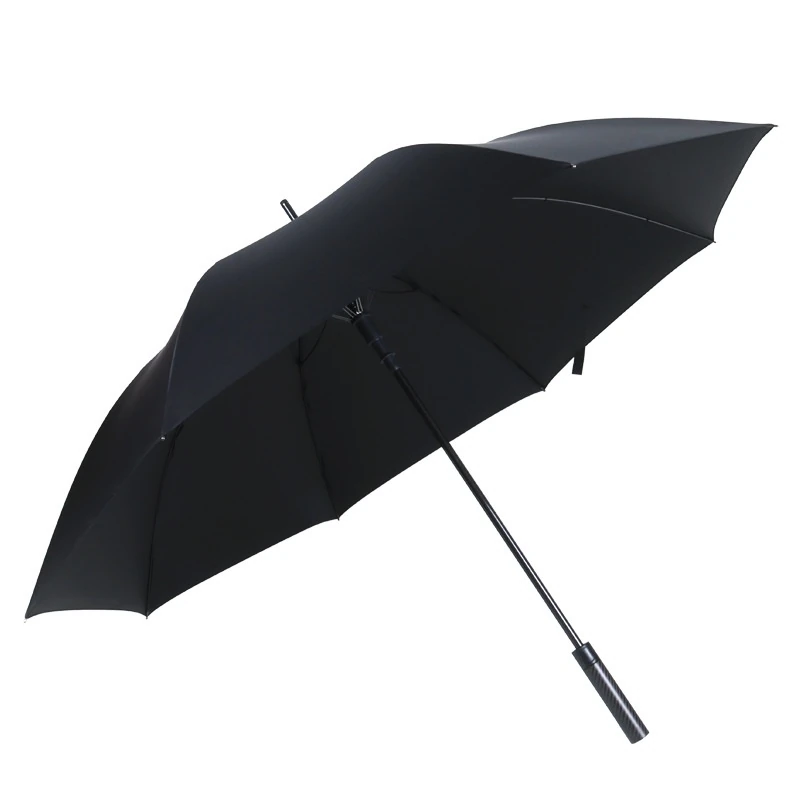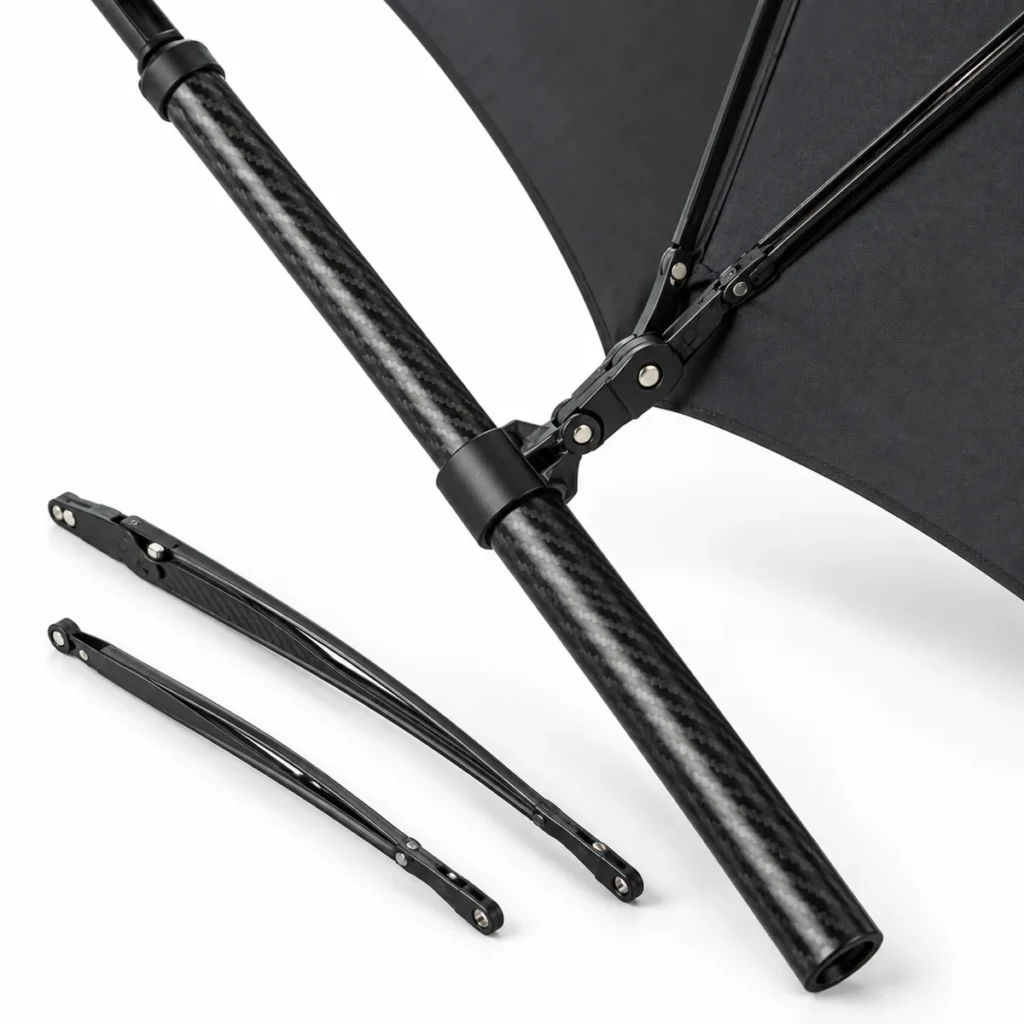
Compare carbon-fiber and fiberglass umbrellas by the components used and the complete construction. Either name may describe only selected shaft or rib sections. Keep canopy size and opening mechanism comparable, and use finished samples or relevant tests for weight and wind-performance claims; a material label does not establish a universal advantage.
Specify the component first
A carbon-fiber umbrella is not necessarily carbon fiber throughout. The shaft, main ribs, stretchers and joints may use different materials. A meaningful quotation identifies those parts separately.
Likewise, the word fiberglass does not describe the resin, rib section, joint design or entire umbrella. Ask for a component breakdown before comparing cost or making a weight claim. Mixed-material frames can be deliberate engineering choices, rather than an incomplete version of a single-material frame.
Compare assemblies, not labels
| Question | Carbon-fiber direction | Fiberglass direction |
|---|---|---|
| Which parts use it? | Confirm shaft, ribs or selected sections | Confirm ribs, stretchers and any other parts |
| What determines weight? | Complete dimensions, layup, joints and other components | Complete dimensions, sections, joints and other components |
| What proves wind performance? | A defined test on the finished umbrella | The same requirement: test the finished umbrella |
| How should buyers compare? | Like-for-like sample and specification | Like-for-like sample and specification |
There is no universal percentage by which a finished carbon-fiber umbrella is lighter or stronger. Canopy size and the rest of the bill of materials can change the comparison.
Choose a useful development target
A travel gift may prioritize folded length and carrying weight. A golf umbrella may prioritize coverage, grip and the behavior of a larger canopy. A premium brand may value the finish of an exposed shaft. Define that target first, then review a suitable construction.
For example, comparing a small manual folding umbrella with a large automatic golf umbrella tells you little about the effect of one frame material. Keep size, mechanism and packaging consistent when evaluating alternatives.
Review the complete sample
Look at the opening and closing action, runner, joints, rib alignment and fabric tension. Check how the umbrella folds and whether the sleeve fits comfortably. If a supplier supplies a performance report, confirm it matches the proposed construction and test conditions.
Request care guidance and discuss how the umbrella should be handled in strong weather. A material label is not a guarantee that an umbrella cannot invert or break.
A clearer inquiry gets a clearer quote
- State your desired format, canopy size and opening mechanism.
- Ask which components are carbon fiber, fiberglass or metal.
- Describe the weight or appearance target without assuming a result.
- Provide quantity, logo requirements and destination.
- Approve a complete sample and any required testing before production.
Our carbon-fiber collection includes development directions; the agreed component specification establishes what will actually be manufactured.
Bekijk uw opties
Bronnen en verder lezen
Deze gids ondersteunt gesprekken over materialen. De goedgekeurde specificatie, het monster en eventuele vereiste testdocumenten bepalen de uiteindelijke bestelling.
Reading a carbon-fiber supplier record
Our archive includes a carbon-fiber tube material declaration dated 18 March 2025. For the tube described in that record, the supplier lists nominal contents of 70% T300 carbon yarn, 25% epoxy resin and 5% other material, with tolerances stated in the document. This is a useful example of why a carbon-fiber component should be specified as a composite rather than described as pure carbon.
The declaration and separate supplier mechanical-test records concern identified components. They do not establish the weight, wind resistance or service life of every finished umbrella. Match the tube or rib reference, dimensions and construction to the umbrella being quoted, and request finished-product testing when a performance claim requires it.
Source: 碳纤维材质证明.pdf, page 1, and 碳纤维测试标准.pdf in the factory archive. See how material records differ from factory audits.