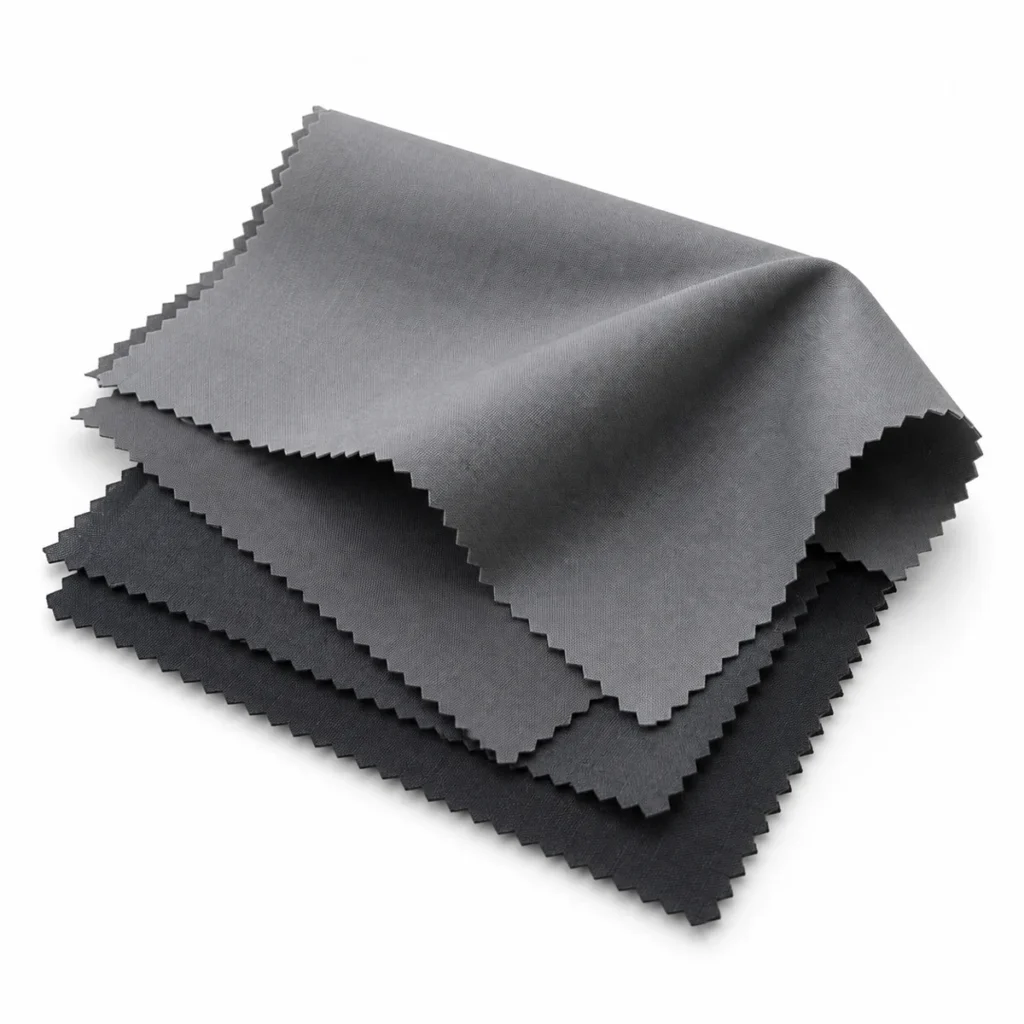
Recycled polyester. Made for your umbrella.
RPET means recycled polyethylene terephthalate. In umbrella making, it describes the recycled polyester used in the canopy fabric. Used PET beverage bottles can become a new textile raw material: they are processed into recycled polymer, spun into yarn and woven into fabric before the canopy is cut and sewn.
Choose RPET when recycled material content is part of your product brief. A folding promotional umbrella, a straight umbrella with a wooden or bamboo handle, or a coordinated sleeve can all be developed around a suitable fabric specification. The weave, color, finish and print still determine how the finished canopy looks and performs.
How RPET umbrella fabric is made.

STEP 01
Collect & sort
Used PET bottles enter a collection stream and are separated by material and color. Caps, labels and other incompatible materials are removed so the feedstock is suitable for recycling.
STEP 02
Wash & flake
The bottles are shredded into small flakes. Washing removes dirt and residues; the flakes are then dried. Clean, consistent feedstock is important for the next processing stages.
STEP 03
Melt & pelletize
The prepared flakes are melted, filtered and formed into recycled polyester chips or pellets. This creates a feedstock that can be processed into textile filaments.
STEP 04
Spin into yarn
The recycled polymer is melted and extruded through fine spinneret holes. The filaments are cooled, drawn and wound into yarn; further texturing can adjust the feel of the yarn.
STEP 05
Weave the fabric
Warp and weft yarns are interlaced on a loom. Yarn size and weave density influence fabric weight, handle and appearance. A pongee-style construction is one option to discuss for umbrella canopies.
STEP 06
Dye, finish & make the canopy
The fabric receives its specified color, print and finish. After inspection, canopy panels are cut, sewn and attached to the frame. The dyeing and printing sequence depends on the selected process.
Recycled feedstock replaces a portion of virgin polyester input. The exact recycled share belongs to the selected fabric and its documentation. This process illustration does not establish an ocean-plastic origin, a bottle count per umbrella or an environmental saving for a specific order.
For a documented industry example of the bottle-to-fiber stages, see UNIFI / REPREVE’s recycling process. This is a process reference; it does not identify the yarn brand supplied for your order.
Our BAMBOO and WOODEN umbrella series.
Ark Umbrella produces two umbrella series that pair RPET pongee canopy fabric with bamboo or wooden handles. Both collections include compact folding umbrellas and classic straight umbrellas, giving buyers a choice of carrying format, opening mechanism and grip style for branded gifts and everyday use.
BAMBOO series — bamboo handles with RPET pongee.
Our BAMBOO series brings the appearance of bamboo to the part of the umbrella you hold. Choose a compact Super Mini for easy carrying, an automatic folding style for convenient operation, or a 23-inch straight umbrella with either a curved or straight bamboo handle. The black canopy and frame shown in the collection create a simple contrast with the bamboo grip.
All four listed styles use RPET pongee fabric, a black metal frame and shaft, and a bamboo handle. The handle shape and opening system distinguish the models.
| Style | Listed size | Opening system | 手元(持ち手) |
|---|---|---|---|
| Super Mini | 21 inch | Manual opening; compact folding format | Bamboo handle |
| Auto Open | 21 inch | Automatic open & close, as listed in the collection specification | Bamboo handle |
| Auto Stick-C | 23 inch | Automatic opening; straight umbrella | Bamboo crook handle |
| Auto Stick | 23 inch | Automatic opening; straight umbrella | Bamboo straight handle |
The folding styles suit projects where portability matters. For a traditional full-length umbrella, choose Auto Stick-C for a curved grip or Auto Stick for the clean profile of a straight bamboo handle.
WOODEN series — wooden handles with RPET pongee.
Our WOODEN series combines RPET pongee fabric with wooden handles in three practical formats. The Super Mini offers a manually opened folding option; Auto Open & Close adds automatic operation; and Auto Stick provides a straight-umbrella format with a long wooden grip. These styles offer a natural wood appearance for corporate gifts, promotional collections and daily use.
All three listed styles use RPET pongee fabric and a black metal frame and shaft, paired with the wooden handle specified below.
| Style | Listed size | Opening system | 手元(持ち手) |
|---|---|---|---|
| Super Mini | 21 inch | Manual opening; compact folding format | Wooden handle |
| Auto Open & Close | 21 inch | Automatic open & close; folding format | Wooden handle |
| Auto Stick | 23 inch | Automatic opening; straight umbrella | Wooden stick handle |
Choose Super Mini for a compact manually operated umbrella, Auto Open & Close when automatic opening and canopy closing are a priority, or Auto Stick when you prefer a full-length umbrella with a wooden grip.
Choose the fabric, then the finish.
RPET is a material-origin description. Pongee describes a fabric construction commonly used in umbrella sourcing, so a canopy can be both RPET and pongee. Compare finished swatches for softness, opacity, crease appearance and color before approving a production sample.
| Decision | Options to discuss | What to check |
|---|---|---|
| Fabric construction | RPET polyester, including suitable pongee-style woven fabrics | Fiber composition, recycled share, yarn size, weave, weight and usable width |
| Color | Solid colors matched to a physical swatch or color reference | Lab dip, shade tolerance and colorfastness requirements |
| Logo printing | Screen printing for suitable logos; transfer or sublimation for compatible polyester fabrics | Artwork, print position, heat compatibility and a printed strike-off |
| Rain protection | A water-repellent finish and suitable coating, where specified | Finished-fabric water resistance and the behavior of the sewn canopy |
| UV protection | A selected UV-protective construction or coating, where required | A relevant test report for the exact finished fabric; recycled content alone gives no UPF rating |
| Handle & sleeve | Bamboo or wood handle directions; a coordinated fabric sleeve | Handle fit, finish and sleeve composition as separate specification items |
Explore the recycled material umbrella collection, bamboo-handle direction and custom branding options. Final availability is confirmed when the fabric, quantity and delivery requirements are known.
Supplier certificates, with the original pages.
The documents below identify two different textile suppliers. They are reproduced from the supplied PDF files with all pages retained. Read each certificate against its named holder, scope and dates, then confirm that the selected fabric and order are covered.
OEKO-TEX® STANDARD 100 concerns testing for harmful substances within its stated scope. GRS concerns recycled materials and their chain of custody, with additional processing requirements. Neither document shown here is a finished-umbrella performance test or a certificate issued to Ark Umbrella.
Official references: OEKO-TEX STANDARD 100 and Textile Exchange’s recycled standards.
OEKO-TEX® STANDARD 100
Stated expiry: 31 October 2026. Verify current status and fabric applicability before ordering.
| Certificate detail | As stated in the supplied document |
|---|---|
| Holder | Sichuan Sunfeng Digital and Intelligent Textile Co. Ltd. |
| Certificate number | SH015 267447 |
| Issuing institute | TESTEX AG, Swiss Textile Testing Institute |
| Issue date | 31 October 2025 |
| Product class | Class I (baby articles), Annex 6 |
| Scope | Woven fabrics made of 100% polyamide, polyamide/spandex and 100% polyester; specified white, dyed and finished fabrics, including water-repellent finishing, transparent PU coating or transparent/white TPU film lamination |
| Supporting test report | SH015 267447.3 is referenced by the certificate; the separate test report is not included in the supplied file |
The scope includes polyester fabrics but does not specify a recycled-content percentage. Confirm the selected RPET fabric article with the supplier. Current certificate status can be checked using OEKO-TEX Label Check.


Global Recycled Standard (GRS)
This supplied scope certificate is retained for reference. It is not evidence of current certification or of GRS-certified goods in a new order. Request an up-to-date scope certificate and the applicable transaction certificate for certified shipments.
| Certificate detail | As stated in the supplied document |
|---|---|
| Holder | Fuzhou Runtai Textile Co.,Ltd. |
| Scope certificate | CU1120686GRS-2021-00096758 |
| License number | 1120686 |
| Certification body | Control Union Certifications B.V. |
| Standard | Global Recycled Standard, Version 4.0 |
| Issued / stated expiry | 23 September 2021 / 22 September 2022 |
| Product category | Dyed fabrics; woven fabrics in the product appendix |
| Listed activities | Dyeing, finishing, printing, trading and weaving |
| Product appendix entry | Post-consumer recycled polyester | Conventional polyester |
|---|---|---|
| Woven dyed fabric — entry 1 | 90.0% | 10.0% |
| Woven dyed fabric — entry 2 | 97.0% | 3.0% |
These percentages describe entries in this historical supplier certificate. They are not a blanket composition claim for every RPET fabric or umbrella offered on this website.


View original historical GRS PDF ↗
A scope certificate describes a supplier’s certified scope; shipment evidence requires the applicable transaction certificate. See Textile Exchange’s certified-company directory and certificate authentication resources.
Build a clear RPET fabric specification.
| Include in your inquiry | Useful details |
|---|---|
| Umbrella format | Folding, straight or golf umbrella; canopy size and intended use |
| Fabric | Target composition and recycled share; yarn size, weave density, weight and width if already defined |
| Color & artwork | Color reference, vector logo, print coverage and positions |
| Finish & performance | Required rain resistance, UV protection, colorfastness and applicable test methods |
| Documentation | Required certification, exact fabric article, current validity and shipment traceability |
| Order plan | Quantity, destination, packing, sample needs and target delivery date |
We review the requested material and documents, prepare fabric and print samples, and agree the final specification before production. For a fuller sourcing checklist, read our RPET umbrella fabric buying guide.
RPET umbrella fabric questions.
Is RPET fabric made from plastic bottles?
Used PET bottles are a common feedstock for recycled polyester. Other polyester waste streams also exist. Confirm the origin of the yarn selected for your order; RPET alone does not mean ocean-recovered plastic.
Is RPET the same as pongee?
RPET identifies recycled polyester. Pongee is a fabric construction description. Ask for the full composition, yarn and weave specification, as well as a finished swatch.
Is every RPET fabric 100% recycled?
No. The recycled share depends on the fabric article. The historical GRS appendix shown here lists 90% and 97% post-consumer recycled polyester entries, not 100%. Your selected fabric needs its own supporting documentation.
Does RPET automatically make an umbrella waterproof?
No. Rain performance depends on the fabric construction, finish, coating, seams and canopy assembly. Agree the required performance and verify it on the finished material or umbrella.
Can RPET umbrella fabric carry a custom logo?
Yes, suitable RPET polyester fabrics can be developed for custom printing. Select the print process against your artwork and the fabric finish, then approve a printed sample.
What do these certificates establish?
The OEKO-TEX file identifies a supplier’s listed textile scope and stated validity. The supplied GRS scope certificate is historical and expired. These are separate suppliers’ documents; the files alone do not prove that a specific new order is covered by both certifications.
How many bottles are used in one umbrella?
There is no universal count. A supported estimate would need the canopy or fabric mass, verified recycled content, the assumed bottle mass and a stated calculation method.
Is an RPET umbrella biodegradable or fully recyclable?
Recycled polyester is still a synthetic polymer and is not inherently biodegradable. End-of-life recycling depends on the complete product, coatings, mixed materials and available collection systems. An RPET canopy does not establish that the whole umbrella is recyclable.